
Industry Economics
Episodes from Maxinomics about Industry Economics.
9 episodes
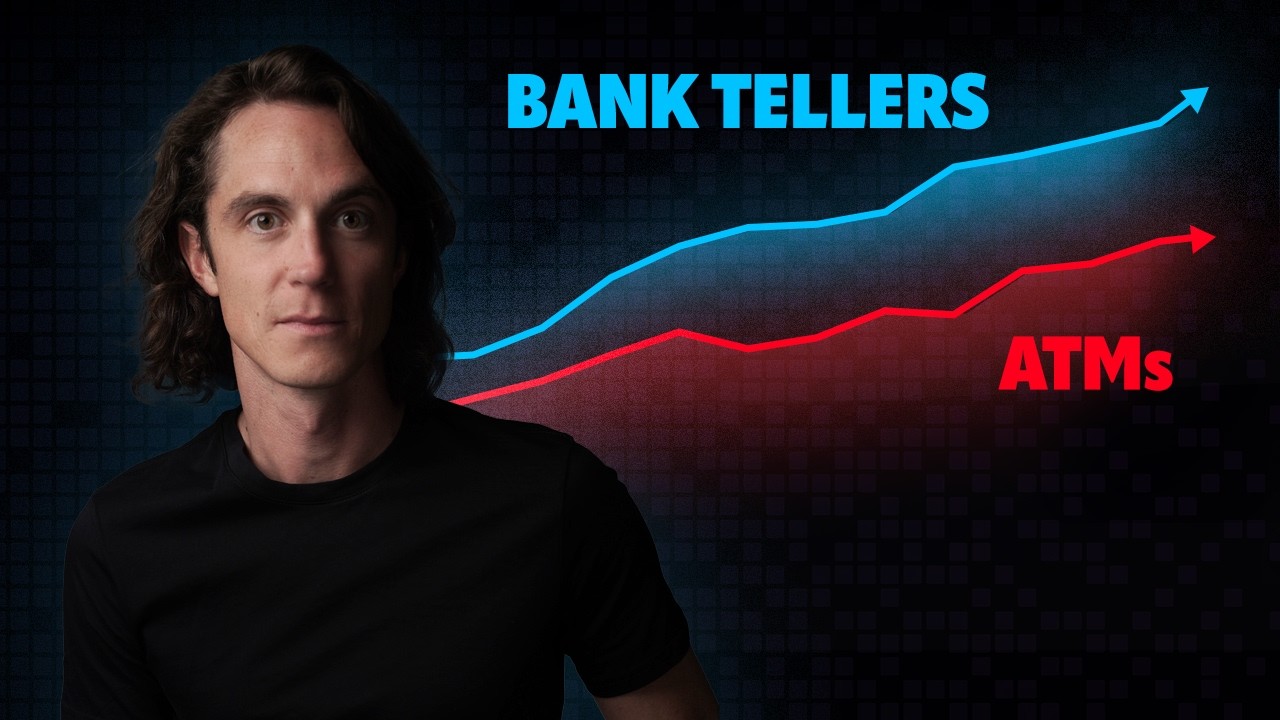
AI Was Supposed To Take Your Job. Why Hasn't It?
Jul 1, 2026 · 20:23
Phil Andrews argues that AI tools like Claude and ChatGPT probably won't take your job, but someone using AI will if you don't use it. Opening with the 1967 debut of the ATM at Barclays, he shows bank tellers instead doubled over the next 50 years, peaking in 2007. Of every occupation title tracked by the U.S. Census over 60 years, only the elevator operator was fully eliminated by automation, while autopilot made airline pilots ten times more numerous. Citing MIT economist David Autor's research, he notes 60% of today's jobs didn't exist 50 years ago, because inventions that make work more valuable create new jobs rather than replacing workers. Using his 3D-printed Maslow's hierarchy pyramid, built with Claude, he explains competing against non-consumption, and footnotes that elevator operators retired because modern skyscrapers like the Burj Khalifa demand computer-managed elevators.

China Will Never Beat Taiwan, Here’s Why
Mar 27, 2026 · 22:54
This episode argues that Taiwan Semiconductor (TSMC) built an uncopyable monopoly—the "Silicon Shield"—on an island whose hostile geography and geopolitical limbo forced it to out-engineer the world. It traces how Taiwan, expelled from the UN Security Council in 1971 in favor of the People's Republic of China, pivoted to chipmaking, adopting the just-in-time system Japan used to beat Detroit and packing 530 companies and 20 fabs around Tsinghua and Chiao Tung universities in Hsinchu Science Park, which makes essentially 100% of the most advanced chips. The episode claims Taiwan's typhoons, droughts, and earthquakes on the ring of fire drove a discipline that yields more than 8 working chips per 10 while Samsung can't hit 5 and Intel reaches maybe 7. Morris Chang's foundry model—never designing a chip, only manufacturing—won Apple after Steve Jobs' fury at Samsung copying the iPhone, and Apple's role as anchor tenant co-develops each generation, keeping Taiwan semi years ahead as a neutral "Switzerland" every country depends on.

The Hidden Force That Made Everyone Wear Wide Leg Pants
Feb 20, 2026 · 17:59
Fashion forecaster WGSN, retailers like Zara and Urban Outfitters, ultra-fast giant Shein, and investor George Soros are the subjects of this episode's argument that wide leg pants didn't happen by accident—WGSN predicted the trend three years out and, by advising all 6,000 retail clients at once, made its own forecast come true. Host Phil Andrews explains this as Reflexivity, where changed perception changes the underlying fundamentals, using the collapse of Silicon Valley Bank as proof: depositors believed the bank was failing, so their withdrawals made it fail. He walks through how retailers test styles in flagship "lab" stores, promote sellouts from 1,500 pairs into hundreds of thousands, and how Shein built a faster loop—SEO-targeted "cheap wedding dress" searches, then 5,000 daily styles linked to 400-plus Chinese factories—exploiting a 1930s customs loophole on sub-$800 packages until the US government shut it down. Time, he argues, is what separates reflexivity from ordinary feedback loops.

Only One of These Cars Can Make Money
Sep 16, 2025 · 24:08
Maxinomics pits Tesla against Waymo in the robotaxi race, with host Phil Andrews arguing the winner will be decided by who can build vehicles cheaper — Andrew Carnegie's vertical integration playbook. In a three-leg San Francisco test, a Tesla on full self-driving finished in 63 minutes versus 78:59 for Waymo — a 16-minute gap that would let Tesla serve the same riders with 25% fewer cars. Tesla bets cameras alone can match human driving; Waymo runs 29 sensors including lidar, echoing Edison's losing DC bet in a winner-takes-most market. Waymo's cars cost an estimated $100,000 each versus Tesla's $38,000 Model Y; instead Waymo partners with Chrysler, Jaguar, Hyundai and Zeekr — an Android-style playbook adding supplier margins and geopolitical risk after Zeekr delisted from the NYSE.
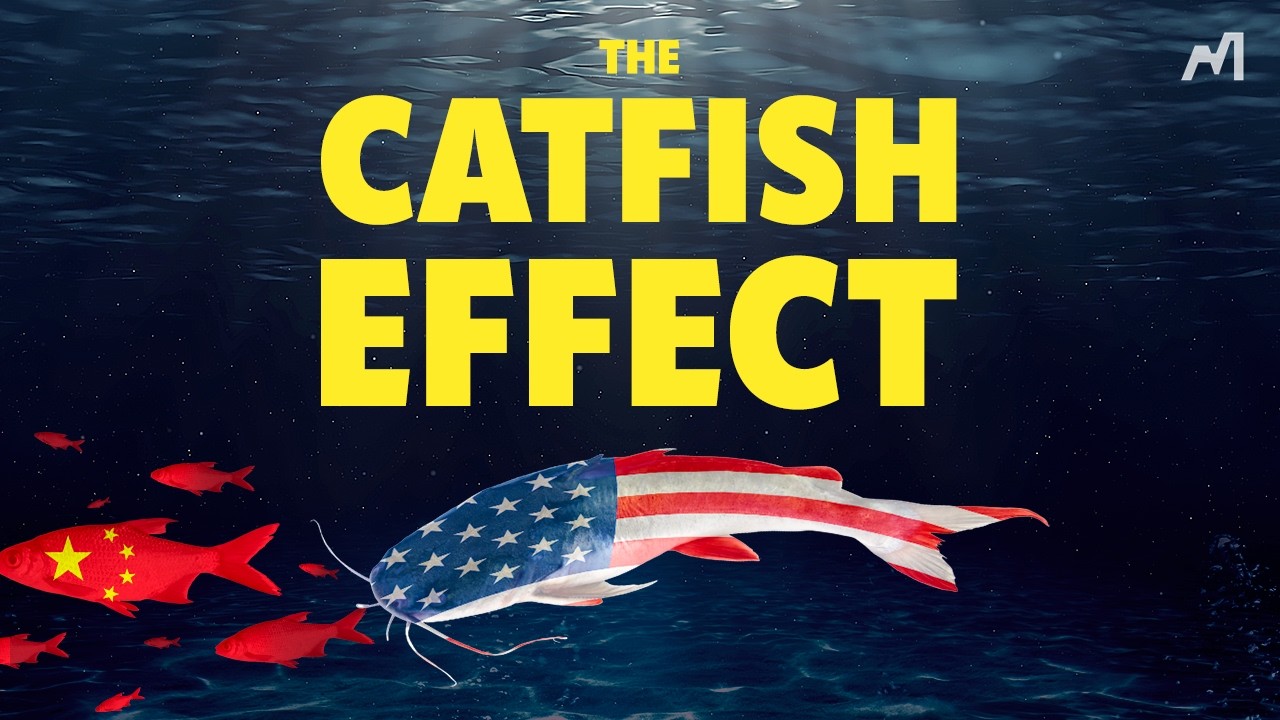
Why Hasn't China Collapsed?
Jun 3, 2025 · 19:59
Leland Miller of China Beige Book joins Maxinomics to explain how Xi Jinping's CCP keeps China predictable by controlling what's made, where people move and who enters. State-owned enterprises—9 trillion of China's 16-trillion stock market—let the party pick winners, steering cheap state credit into solar, EVs, batteries and shipbuilding. Hukou rules grew Shenzhen from 30,000 people in 1980 to 18 million, while the Great Firewall and the scrapped Ant IPO after Jack Ma called Chinese banks pawn shops cap speech and business. At 0.07% immigrants and under 2,000 new citizens a year, China stays closed yet gave Tesla a fully owned Shanghai factory to trigger the catfish effect that seeded its EV industry. Miller rejects collapse predictions: the non-commercial financial system doesn't fail like the West's.

Why Ski Resorts Can't Solve Their Crowd Problem
Mar 6, 2025 · 9:47
Phil Andrews argues Vail Resorts' Epic Pass has hit a growth ceiling: every extra skier worsens the experience, and resorts like Breckenridge can barely expand. Vail owns only the base areas and parking — the mountains belong to the U.S. government — so an approved 334-unit Breckenridge Grand Vacations project was cut to 190 condos and 36 hotel rooms after resident pushback, and Park City canceled two lift upgrades. About 20% of revenue rides on the two weeks around Christmas, so resorts lean on snowmaking at $1,000–$2,500 per acre. Vail's spread-out resorts hedge bad snow years, unlike American Ski Company, which collapsed after poor 1999–2001 seasons. After record 2022–23 revenue, Vail raised Epic Pass prices 8%, then sold 2% fewer passes for the first time — a negative network effect.

You Don’t Want to Run an Airline
Feb 20, 2025 · 9:50
Airlines including American, Delta, United, Southwest and Spirit have been terrible investments for five decades because investors have put tens of billions more into them than the industry has earned in profit, argues Maxinomics. The episode explains that airlines all compete on price with nearly identical planes from just Boeing and Airbus, whose combined order backlog of 15,000 planes means buyers wait at least 8 years for delivery. Idle planes lose $400–$800 per hour, and catastrophes like 9/11 and COVID grounded fleets while fixed costs like pensions and terminal fees continued. Southwest's one-plane Boeing 737 strategy and 10-minute turnarounds explain its outperformance. United's stock fell below its fleet's value, prompting buybacks and Elliott Management's Southwest campaign, while suppliers TransDime and FTAI profit on Spirit's $1.08 million-per-plane yearly maintenance. The whole industry's profit is just $22 billion—less than Google makes in a quarter.

Is Chipotle About to Dethrone McDonald’s?
Sep 26, 2024 · 8:58
Chipotle is on a collision course with McDonald's, argues Maxinomics, and its push into small-town America—39 of its last 100 U.S. stores opened in areas under 20,000 people—could make it the world's most valuable food service chain. McDonald's is currently worth triple Chipotle, but Chipotle matches it at about 100 calories per dollar with visibly higher-quality food. The episode explains how Chipotle's fresh, never-frozen model caused E. coli outbreaks that wiped out two-thirds of its value, forcing it to build RFID supply chain tracking no other restaurant company has. It also covers Chipotle's speed edge—1 minute 45 seconds per order versus McDonald's 4 minutes 46—and Chipotlanes, which raise store sales 10 to 15%.

Train Manufacturers Are About to Make A Ton of Money
Jul 12, 2024 · 9:39
California's 2030 ban on locomotives over 23 years old and its 2035 zero-emission mandate will force railroads to replace 15,000 engines at $7.5 million apiece — a $112 billion windfall Wabtec, the market leader since buying GE's railroad division in 2018, is best positioned to capture. Rival Progress Rail, a Caterpillar company, sued Wabtec as a monopoly in 2023 as both race to build replacement technologies. Battery locomotives are capped at 800 miles per charge and cost up to $10 million, while hydrogen trains, proven in Germany, aren't expected at freight scale for 5 to 10 years. California's Clean Air Act exemption lets it set national emissions standards, and one locomotive's batteries equal 120 Tesla Model 3s, straining grids and tight copper and lithium supply chains.
Powered by PodHood