21 episodes

China Found Something Better Than Oil
This episode explains how China built a 94% monopoly on magnet rare earths—99% on samarium—deliberately rather than by geology, tracing the 1995 sale of General Motors' Magnequench division to firms tied to Deng Xiaoping's son-in-laws. It covers how the 1983 neodymium magnet from GM and Hitachi Metals shrank motors in AirPods, EVs, and Tomahawk missiles, and how the Mountain Pass mine shut down after thorium spills made US refining unviable. It lays out China's four-step playbook: cheap state loans, export caps that quadrupled world prices, extracting know-how from foreign firms, then flooding markets to kill new mines. It ends with the April 4, 2025 samarium export ban and the Pentagon's countermove—take-or-pay deals guaranteeing $110 per kilogram for 10 years while Mountain Pass reopens with a Texas processing facility.Sep 11, 2026 · 27:26 · 4.8M views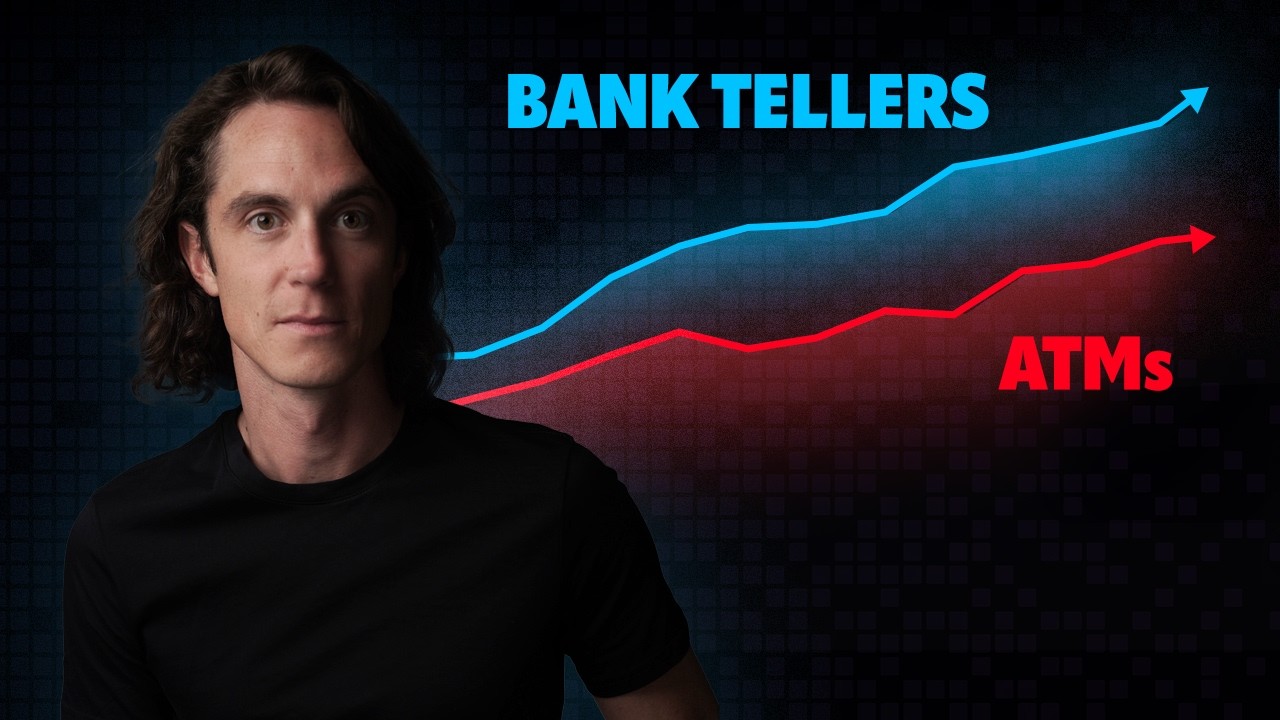
AI Was Supposed To Take Your Job. Why Hasn't It?
Phil Andrews argues that AI tools like Claude and ChatGPT probably won't take your job, but someone using AI will if you don't use it. Opening with the 1967 debut of the ATM at Barclays, he shows bank tellers instead doubled over the next 50 years, peaking in 2007. Of every occupation title tracked by the U.S. Census over 60 years, only the elevator operator was fully eliminated by automation, while autopilot made airline pilots ten times more numerous. Citing MIT economist David Autor's research, he notes 60% of today's jobs didn't exist 50 years ago, because inventions that make work more valuable create new jobs rather than replacing workers. Using his 3D-printed Maslow's hierarchy pyramid, built with Claude, he explains competing against non-consumption, and footnotes that elevator operators retired because modern skyscrapers like the Burj Khalifa demand computer-managed elevators.Jul 1, 2026 · 20:23 · 1M views
How SpaceX Is Making America Uncatchable
SpaceX, carrying 90% of everything launched to orbit this year, is selling the coming back: from caravels to railroads, frontier fortunes went to whoever could return, not just depart. Frontiers reset Maslow's hierarchy to survival, making picks and shovels the most durable business. Useful space is tiny: Low Earth Orbit, where Starlink's 6,000+ satellites block rivals, Geostationary Orbit's 1,845 slots, and a Switzerland-sized ice patch at the Moon's south pole. Ice is water, and its oxygen liquefies into rocket fuel, so whoever builds the Moon's first gas station controls the only refueling point before Mars—why Jeff Bezos' Blue Origin, Amazon, and China race to get there. With Planet Labs' satellites and the rocket equation, it weighs generational wealth against a dot-com bubble.Jun 10, 2026 · 24:50 · 1.5M views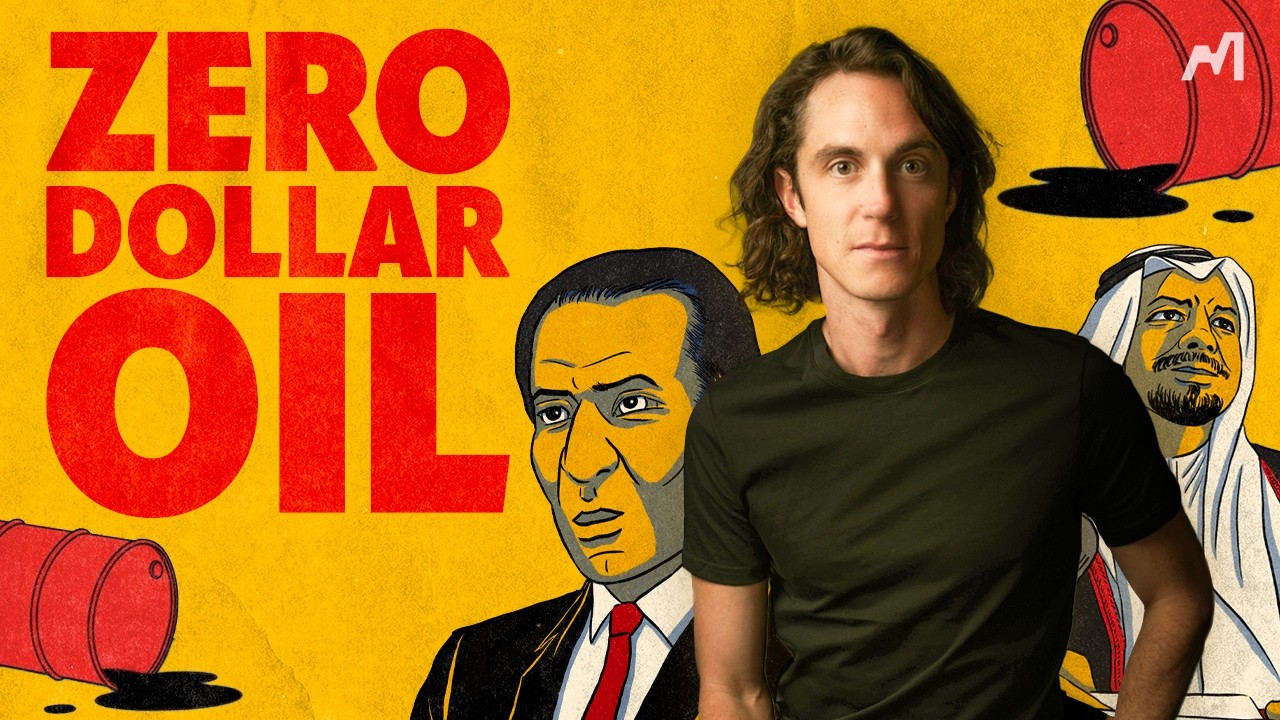
It Was Saudi Arabia That Broke Iran, Not the US
Saudi Arabia, not the US, broke Iran: this episode argues the 1976 Doha meeting, where Saudi oil minister Ahmed Zaki Yamani walked out and returned to veto an increase to $13.50 in favor of a 5% rise and a production jump from 8 million to 11 million barrels a day, was the moment the Middle East split. Host Phil Andrews explains the math: Ghawar oil costs Saudi Arabia $3 a barrel, while Iran's fiscal breakeven — the price the Shah needed to fund his lavish promises — was $19 within two years. The Stevenson Plan story shows why: 1920s British rubber's price hikes pushed customers to better synthetic rubber, and petrostates fear prices so high the world finds a replacement. The same logic reappears in 2016, when Saudi Arabia flooded American fracking into bankruptcies to protect market share, proving the kingdom chooses self-interest over friends.May 8, 2026 · 18:20 · 1.1M views
The Oil Nobody Is Allowed to Buy
Sanctions create a vacuum the shadow oil fleet fills: the episode traces how Russian oil gets smuggled — from the Bosporus jam of 28 ships with 20 million barrels to the paperwork that gets a $75 million cargo paid through banks — using a playbook pioneered by Marc Rich. Host Phil Andrews explains Rich's 'Apartheid Premium' earned him $1–2 billion selling oil to sanctioned South Africa for 20 years. Smuggling takes a rust-bucket tanker bought for $15 million, not scrapped for $5 million, a Flag of Convenience from landlocked Bolivia for $500,000, and a 48-hour ship-to-ship transfer with transponders off. Rich's unlock was the post-1973 spot market, letting sellers write 'ON ORDERS' on the Bill of Lading instead of a destination. Footnotes cover Turkey's insurance-based ship stops and why enforcement fuels BRICS currency ambitions.Mar 31, 2026 · 16:13 · 360.3K views
China Will Never Beat Taiwan, Here’s Why
This episode argues that Taiwan Semiconductor (TSMC) built an uncopyable monopoly—the "Silicon Shield"—on an island whose hostile geography and geopolitical limbo forced it to out-engineer the world. It traces how Taiwan, expelled from the UN Security Council in 1971 in favor of the People's Republic of China, pivoted to chipmaking, adopting the just-in-time system Japan used to beat Detroit and packing 530 companies and 20 fabs around Tsinghua and Chiao Tung universities in Hsinchu Science Park, which makes essentially 100% of the most advanced chips. The episode claims Taiwan's typhoons, droughts, and earthquakes on the ring of fire drove a discipline that yields more than 8 working chips per 10 while Samsung can't hit 5 and Intel reaches maybe 7. Morris Chang's foundry model—never designing a chip, only manufacturing—won Apple after Steve Jobs' fury at Samsung copying the iPhone, and Apple's role as anchor tenant co-develops each generation, keeping Taiwan semi years ahead as a neutral "Switzerland" every country depends on.Mar 27, 2026 · 22:54 · 2M views
The Hidden Force That Made Everyone Wear Wide Leg Pants
Fashion forecaster WGSN, retailers like Zara and Urban Outfitters, ultra-fast giant Shein, and investor George Soros are the subjects of this episode's argument that wide leg pants didn't happen by accident—WGSN predicted the trend three years out and, by advising all 6,000 retail clients at once, made its own forecast come true. Host Phil Andrews explains this as Reflexivity, where changed perception changes the underlying fundamentals, using the collapse of Silicon Valley Bank as proof: depositors believed the bank was failing, so their withdrawals made it fail. He walks through how retailers test styles in flagship "lab" stores, promote sellouts from 1,500 pairs into hundreds of thousands, and how Shein built a faster loop—SEO-targeted "cheap wedding dress" searches, then 5,000 daily styles linked to 400-plus Chinese factories—exploiting a 1930s customs loophole on sub-$800 packages until the US government shut it down. Time, he argues, is what separates reflexivity from ordinary feedback loops.Feb 20, 2026 · 17:59 · 1.5M views
Why Everyone Is Wrong About the AI Bubble
Maxinomics asks if the AI boom repeats the Dotcom bubble, arguing it rests on three claims — AI keeps getting better, we need more data centers, everyone is using it — tested against the Dotcom era's 'critical lie': $500 billion of fiber, 90% unused as 'Dark Fiber.' It explains how models train on billions of word-guess flashcards, why one video frame packs 1 million times more information than a word, and why Nvidia chips run around the clock — no 'Dark GPU' equivalent — while data centers need power equal to 100 nuclear plants. It covers ChatGPT's retention rebound past Google's 95% benchmark, DeepSeek's $6 million model that cut Nvidia 17% overnight, and Jevons' Paradox — whale oil to kerosene — driving a 50x AI-use surge, concluding AI is a forest expanding, not a bubble.Dec 23, 2025 · 21:43 · 1.5M views
The Real Reason We Left the Gold Standard
Host Phil Andrews argues that leaving the Gold Standard was an inevitability forced by the laws of nature, tracing the Welcome Stranger nugget, the Brinks-Mat robbery, and modern gold hoarding. The 1869 Welcome Stranger—172 pounds found 1.2 inches down, hidden two nights by men fearing murder—shows gold's meltability made it untraceable money everyone accepts. In the 1983 Brinks-Mat robbery, thieves unknowingly stole three tons from Heathrow in 27 minutes; only a third was recovered. He explains the Bank of England could issue pounds only as gold entered its vault, but anchoring money to finite metal choked credit as one ounce came to cost 120 tons of earth. He ends arguing that capital controls in India, China, Turkey, and Russia keep gold the real standard for billions.Nov 25, 2025 · 13:41 · 1.1M views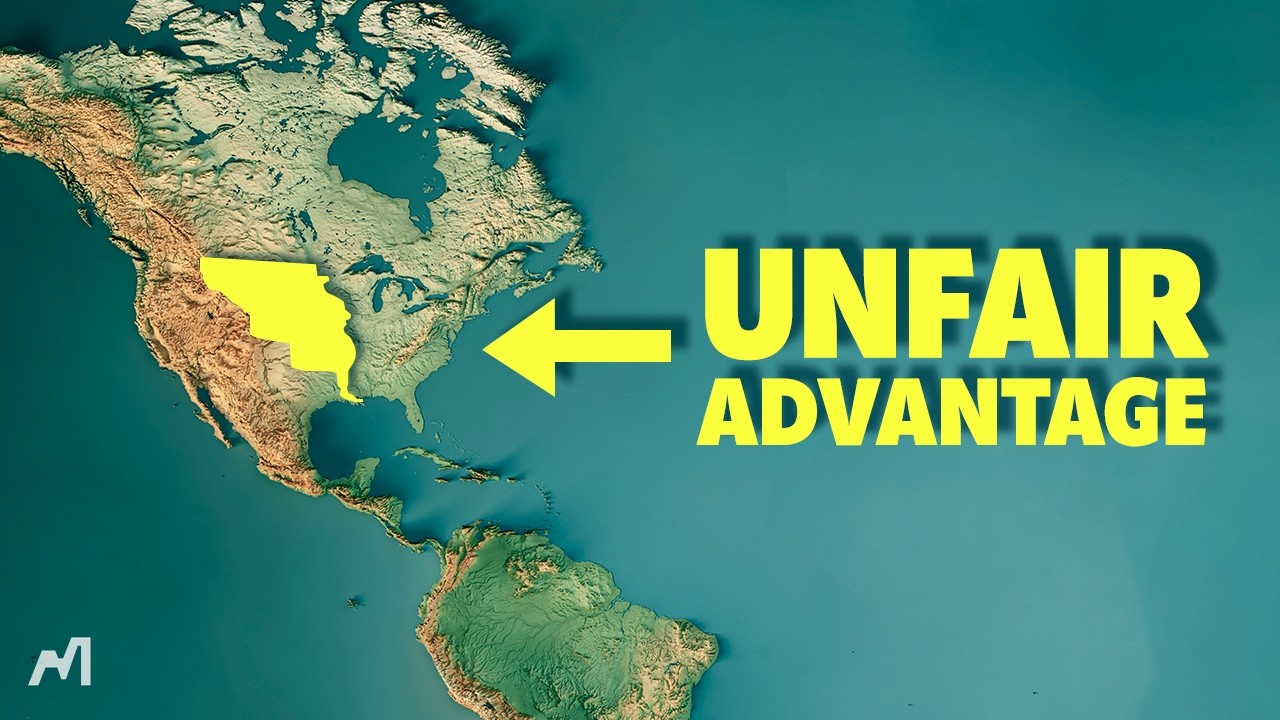
America Will Be the Last Superpower, Here’s Why
The United States stays the world's last superpower because geography, not politics or the economy, predetermined it, argues Phil Andrews. Glaciers carved natural deep water ports on America's coasts, and the $340 million Louisiana Purchase — worth at least $60 trillion today — delivered the Mississippi Basin, with more navigable river miles than the rest of the world combined. China, hemmed to one ocean with 80% of its oil passing the Malacca Strait; Africa, with an unnavigable Congo River and 20% of the planet's land but under 5% of its coastline; Russia, lacking warm water ports; and England, made invadable once planes crossed the Channel, all lack that power. Egypt's Nile produced history's most stable society, while two oceans have spared the U.S. rebuilding for 150 years.Sep 30, 2025 · 13:45 · 4.3M views
Only One of These Cars Can Make Money
Maxinomics pits Tesla against Waymo in the robotaxi race, with host Phil Andrews arguing the winner will be decided by who can build vehicles cheaper — Andrew Carnegie's vertical integration playbook. In a three-leg San Francisco test, a Tesla on full self-driving finished in 63 minutes versus 78:59 for Waymo — a 16-minute gap that would let Tesla serve the same riders with 25% fewer cars. Tesla bets cameras alone can match human driving; Waymo runs 29 sensors including lidar, echoing Edison's losing DC bet in a winner-takes-most market. Waymo's cars cost an estimated $100,000 each versus Tesla's $38,000 Model Y; instead Waymo partners with Chrysler, Jaguar, Hyundai and Zeekr — an Android-style playbook adding supplier margins and geopolitical risk after Zeekr delisted from the NYSE.Sep 16, 2025 · 24:08 · 481.1K views
They're Lying to You About Nuclear Energy
Host Phil Andrews argues that fear and regulation, not accidents like Three Mile Island, killed America's nuclear industry, which flipped the switch on three reactors a year in 1969 but collapsed after the NRC's Linear No-Threshold rule took hold in 1975. Radiation is unavoidable—dentist X-rays, Everest climbs—yet Chernobyl caused only 50 sure deaths and Fukushima no measurable cancer rise. Rules ballooned from 400 standards in 1970 to 1,800 by 1978, delaying plants like Seabrook 14 years and driving the first utility bankruptcy since the Great Depression, at $44 million per month of delay. Four reactors can power Manhattan, versus 25x the land for solar and 300x for wind. GE's small modular reactors, based on 70 years of safe Navy submarine reactors, could join the grid by 2030.Aug 12, 2025 · 18:25 · 4M views
Why Hasn't China Collapsed?
Leland Miller of China Beige Book joins Maxinomics to explain how Xi Jinping's CCP keeps China predictable by controlling what's made, where people move and who enters. State-owned enterprises—9 trillion of China's 16-trillion stock market—let the party pick winners, steering cheap state credit into solar, EVs, batteries and shipbuilding. Hukou rules grew Shenzhen from 30,000 people in 1980 to 18 million, while the Great Firewall and the scrapped Ant IPO after Jack Ma called Chinese banks pawn shops cap speech and business. At 0.07% immigrants and under 2,000 new citizens a year, China stays closed yet gave Tesla a fully owned Shanghai factory to trigger the catfish effect that seeded its EV industry. Miller rejects collapse predictions: the non-commercial financial system doesn't fail like the West's.Jun 3, 2025 · 19:59 · 1.1M views
Who Owns the Moon's Cell Towers?
NASA is building the first-ever GPS network for the Moon because the aging Deep Space Network—14 antennas built in 1960 that can only listen to one spacecraft at a time—can't handle the surge of lunar missions. The episode explains how the Artemis I mission alone consumed 1,774 hours, or 23% of the network's capacity, forcing the James Webb Telescope to wait 70-80 hours between connections instead of its usual 12. With payloads going parabolic and China racing to dominate space, competition for lunar territory—especially the South Pole, where water ice is known to exist—makes a dedicated Moon network an inevitability. Intuitive Machines, the first private company to land on the Moon, won a nearly $5 billion NASA contract to build the five-satellite Cislunar Network, capable of streaming 4K video and delivering GPS-level navigation accuracy.Mar 30, 2025 · 8:11 · 125.9K views
Why Ski Resorts Can't Solve Their Crowd Problem
Phil Andrews argues Vail Resorts' Epic Pass has hit a growth ceiling: every extra skier worsens the experience, and resorts like Breckenridge can barely expand. Vail owns only the base areas and parking — the mountains belong to the U.S. government — so an approved 334-unit Breckenridge Grand Vacations project was cut to 190 condos and 36 hotel rooms after resident pushback, and Park City canceled two lift upgrades. About 20% of revenue rides on the two weeks around Christmas, so resorts lean on snowmaking at $1,000–$2,500 per acre. Vail's spread-out resorts hedge bad snow years, unlike American Ski Company, which collapsed after poor 1999–2001 seasons. After record 2022–23 revenue, Vail raised Epic Pass prices 8%, then sold 2% fewer passes for the first time — a negative network effect.Mar 6, 2025 · 9:47 · 872.3K views
You Don’t Want to Run an Airline
Airlines including American, Delta, United, Southwest and Spirit have been terrible investments for five decades because investors have put tens of billions more into them than the industry has earned in profit, argues Maxinomics. The episode explains that airlines all compete on price with nearly identical planes from just Boeing and Airbus, whose combined order backlog of 15,000 planes means buyers wait at least 8 years for delivery. Idle planes lose $400–$800 per hour, and catastrophes like 9/11 and COVID grounded fleets while fixed costs like pensions and terminal fees continued. Southwest's one-plane Boeing 737 strategy and 10-minute turnarounds explain its outperformance. United's stock fell below its fleet's value, prompting buybacks and Elliott Management's Southwest campaign, while suppliers TransDime and FTAI profit on Spirit's $1.08 million-per-plane yearly maintenance. The whole industry's profit is just $22 billion—less than Google makes in a quarter.Feb 20, 2025 · 9:50 · 115.7K views
The REAL Reason the US Is Betting on Tariffs
Host Phil Andrews argues the US has been in a trade war with China since the 2000s and that tariffs—not the WTO—are America's remaining defense against dumping, forced technology transfer, and IP theft. After China joined the WTO in 2001, the US could no longer unilaterally set tariffs, and years-long WTO disputes let Chinese solar firms bankrupt the US solar industry. The Trump administration blocked WTO judges until the court fell to two members by 2019, and the Biden administration extended most Trump tariffs. The episode covers China's hacks of Westinghouse blueprints and the F-35 plans, and the 1964 chicken tax that pushed Toyota, Honda, and Nissan into US truck plants. Andrews argues tariffs don't cause inflation and that 5 million manufacturing jobs left the US between 2000 and 2010.Jan 8, 2025 · 11:10 · 955.8K views
Is Waymo About to Dethrone Uber?
Uber stands to capture the $25 billion that US riders pay drivers each year by partnering with Google's Waymo, which has scaled driverless rideshare from under 300 rides per day in Phoenix last January to 15,000 rides per day across four cities, on track for 40,000 within a year. Phil Andrews argues Uber's exclusive Waymo deal in Austin and Atlanta lets the historically asset-light company pocket $0.70 per mile, since riders pay $3.20 per mile while a Waymo costs at most $1.50 per mile to operate, and to redesign the door-to-door experience it currently can't control with human drivers. Using Chicago's full 136-million-ride dataset, he estimates covering peak demand would take roughly 10,000-20,000 cars per city, or a minimum of 300,000 Waymos across the 30 largest US cities. At a $0.15 per-mile profit and 50% market share, Waymo could earn $4 billion a year, though Tesla FSD, Zoox, and Nuro compete, and the next city choice—snowy or Sunbelt—will signal the software's confidence.Nov 1, 2024 · 9:30 · 100.6K views
Is Chipotle About to Dethrone McDonald’s?
Chipotle is on a collision course with McDonald's, argues Maxinomics, and its push into small-town America—39 of its last 100 U.S. stores opened in areas under 20,000 people—could make it the world's most valuable food service chain. McDonald's is currently worth triple Chipotle, but Chipotle matches it at about 100 calories per dollar with visibly higher-quality food. The episode explains how Chipotle's fresh, never-frozen model caused E. coli outbreaks that wiped out two-thirds of its value, forcing it to build RFID supply chain tracking no other restaurant company has. It also covers Chipotle's speed edge—1 minute 45 seconds per order versus McDonald's 4 minutes 46—and Chipotlanes, which raise store sales 10 to 15%.Sep 26, 2024 · 8:58 · 564.6K views
Train Manufacturers Are About to Make A Ton of Money
California's 2030 ban on locomotives over 23 years old and its 2035 zero-emission mandate will force railroads to replace 15,000 engines at $7.5 million apiece — a $112 billion windfall Wabtec, the market leader since buying GE's railroad division in 2018, is best positioned to capture. Rival Progress Rail, a Caterpillar company, sued Wabtec as a monopoly in 2023 as both race to build replacement technologies. Battery locomotives are capped at 800 miles per charge and cost up to $10 million, while hydrogen trains, proven in Germany, aren't expected at freight scale for 5 to 10 years. California's Clean Air Act exemption lets it set national emissions standards, and one locomotive's batteries equal 120 Tesla Model 3s, straining grids and tight copper and lithium supply chains.Jul 12, 2024 · 9:39 · 349.7K views
Why Countries Are Pouring Billions into Liquefied Natural Gas
The 2022 Nord Stream pipeline shutdown and explosion transformed the global natural gas trade, making liquefied natural gas (LNG) central to energy security. Fracking created a U.S. gas surplus, and the $18 billion Sabine Pass terminal opened in 2016, making the U.S. the world's largest LNG exporter by 2022. When Russia cut off gas flows, Germany, which had no regasification terminals, built three in 18 months to import U.S. LNG from Freeport Gulf Coast in Texas. The Freeport explosion that destroyed 20% of U.S. export capacity showed how global spot markets now expose American gas prices to worldwide shocks. With permits already issued, U.S. export capacity will triple in three years, likely raising prices as EVs and generative AI lift electricity demand; 200 new LNG tankers launch by 2027.May 23, 2024 · 9:29 · 198.8K viewsThis episode explains how China built a 94% monopoly on magnet rare earths—99% on samarium—deliberately rather than by geology, tracing the 1995 sale of General Motors' Magnequench division to firms tied to Deng Xiaoping's son-in-laws. It covers how the 1983 neodymium magnet from GM and Hitachi Metals shrank motors in AirPods, EVs, and Tomahawk missiles, and how the Mountain Pass mine shut down after thorium spills made US refining unviable. It lays out China's four-step playbook: cheap state loans, export caps that quadrupled world prices, extracting know-how from foreign firms, then flooding markets to kill new mines. It ends with the April 4, 2025 samarium export ban and the Pentagon's countermove—take-or-pay deals guaranteeing $110 per kilogram for 10 years while Mountain Pass reopens with a Texas processing facility.
Ready to be seen? Check that appointment off your to-do list with Zocdoc: http://zocdoc.com/maxinomics #sponsored A coil of copper, a battery, and a magnet can spin until the battery dies. That quiet rotation is also why phones, cars, and missiles depend on a handful of metals that almost nobody else can turn into magnets at scale. One country controls the magnet rare earths the rest of the world needs. The deposits sit in many places. The hard part is pulling twins of the periodic table apart from dirt, waste, and heat, then keeping the know-how at home. From AirPods and the Ford Explorer to Tomahawk fins, the same physics shows up. So does a pattern of cheap loans, export doors that slam shut, then reopen at prices that kill new mines. 0:00 Why China Controls the Magnets 1:10 How a Motor Actually Works 2:07 The Magnet That Changed Everything 4:16 China Doesn't Own the Dirt 6:50 Selling America's Magnet Company 8:31 The Separation Problem 11:24 The Dirty Business Nobody Wanted 13:10 How China Builds a Monopoly 16:45 Missiles, Heat, and One Rare Metal 21:30 The Day the Monopoly Stopped Pretending 24:07 Breaking Free Topics covered: • How a permanent magnet and a live copper coil make a motor • Why neodymium magnets shrank starters, hard drives, tools, and EVs • Samarium-cobalt magnets, heat, and World War II radar • Cobalt, the Congo, General Motors, Hitachi Metals, and Magnequench • Mountain Pass in California versus Baotou and southern China clay • US Geological Survey deposits, light versus heavy rare earths • Why refining looks like sorting identical twins, plus thorium waste • China Northern Rare Earth Group, China Rare Earth Group, and the four-step monopoly pattern • Dysprosium, samarium, Tomahawk steering, and the 2025 magnet cutoff • Pentagon take-or-pay deals, Japan, Australia, and Mountain Pass coming back online in Texas Follow Maxinomics on social: X: https://x.com/maxinomics Instagram: https://www.instagram.com/maxinomicsmb TikTok: https://www.tiktok.com/@UCUEmaeh13ai1ivT5wzz5Lhg Producer: Phil Andrews (the guy in the videos and the comments) Video Editor: Sebastian Vega & Greg Jacobs Motion Graphics: Seth Laupus Director of Production Services: Sam Wolf Thumbnail: Luca Depardon Franchise Content Producer: Tariq Abdellatif President, Morning Brew: Devin Emery