
Global Power
Episodes from Maxinomics about Global Power.
4 episodes
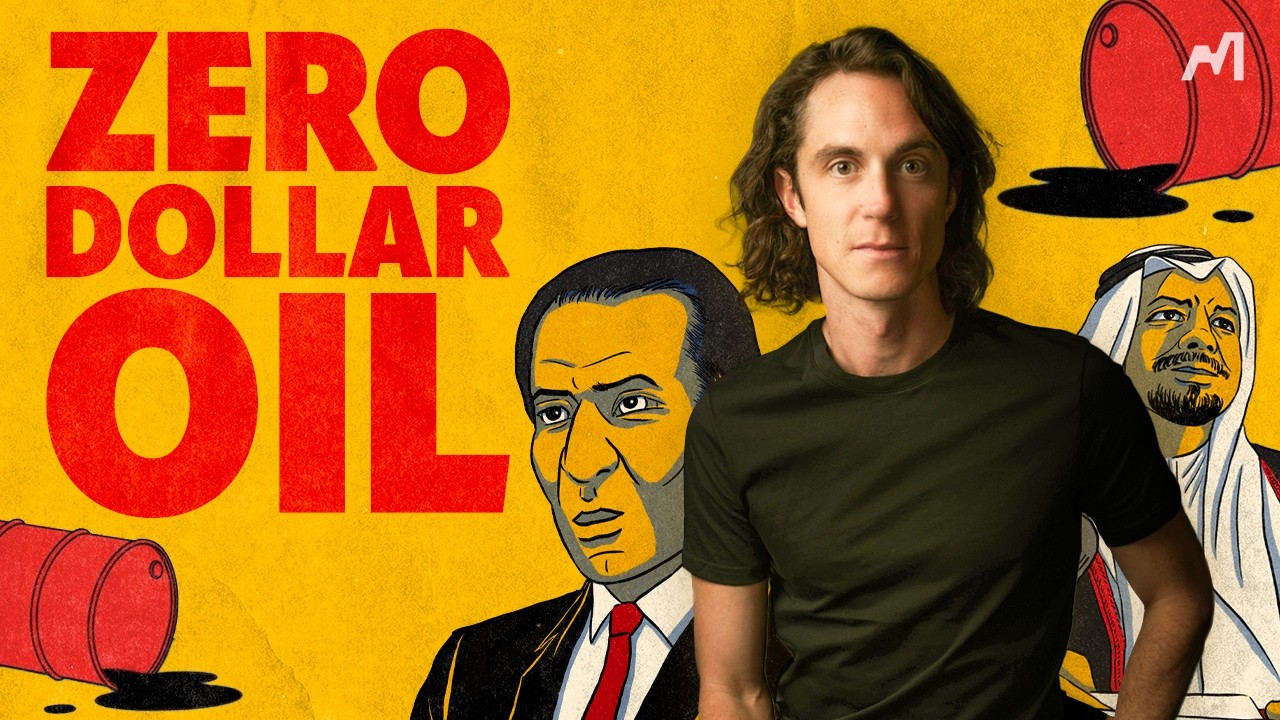
It Was Saudi Arabia That Broke Iran, Not the US
May 8, 2026 · 18:20
Saudi Arabia, not the US, broke Iran: this episode argues the 1976 Doha meeting, where Saudi oil minister Ahmed Zaki Yamani walked out and returned to veto an increase to $13.50 in favor of a 5% rise and a production jump from 8 million to 11 million barrels a day, was the moment the Middle East split. Host Phil Andrews explains the math: Ghawar oil costs Saudi Arabia $3 a barrel, while Iran's fiscal breakeven — the price the Shah needed to fund his lavish promises — was $19 within two years. The Stevenson Plan story shows why: 1920s British rubber's price hikes pushed customers to better synthetic rubber, and petrostates fear prices so high the world finds a replacement. The same logic reappears in 2016, when Saudi Arabia flooded American fracking into bankruptcies to protect market share, proving the kingdom chooses self-interest over friends.

The Oil Nobody Is Allowed to Buy
Mar 31, 2026 · 16:13
Sanctions create a vacuum the shadow oil fleet fills: the episode traces how Russian oil gets smuggled — from the Bosporus jam of 28 ships with 20 million barrels to the paperwork that gets a $75 million cargo paid through banks — using a playbook pioneered by Marc Rich. Host Phil Andrews explains Rich's 'Apartheid Premium' earned him $1–2 billion selling oil to sanctioned South Africa for 20 years. Smuggling takes a rust-bucket tanker bought for $15 million, not scrapped for $5 million, a Flag of Convenience from landlocked Bolivia for $500,000, and a 48-hour ship-to-ship transfer with transponders off. Rich's unlock was the post-1973 spot market, letting sellers write 'ON ORDERS' on the Bill of Lading instead of a destination. Footnotes cover Turkey's insurance-based ship stops and why enforcement fuels BRICS currency ambitions.

China Will Never Beat Taiwan, Here’s Why
Mar 27, 2026 · 22:54
This episode argues that Taiwan Semiconductor (TSMC) built an uncopyable monopoly—the "Silicon Shield"—on an island whose hostile geography and geopolitical limbo forced it to out-engineer the world. It traces how Taiwan, expelled from the UN Security Council in 1971 in favor of the People's Republic of China, pivoted to chipmaking, adopting the just-in-time system Japan used to beat Detroit and packing 530 companies and 20 fabs around Tsinghua and Chiao Tung universities in Hsinchu Science Park, which makes essentially 100% of the most advanced chips. The episode claims Taiwan's typhoons, droughts, and earthquakes on the ring of fire drove a discipline that yields more than 8 working chips per 10 while Samsung can't hit 5 and Intel reaches maybe 7. Morris Chang's foundry model—never designing a chip, only manufacturing—won Apple after Steve Jobs' fury at Samsung copying the iPhone, and Apple's role as anchor tenant co-develops each generation, keeping Taiwan semi years ahead as a neutral "Switzerland" every country depends on.

The REAL Reason the US Is Betting on Tariffs
Jan 8, 2025 · 11:10
Host Phil Andrews argues the US has been in a trade war with China since the 2000s and that tariffs—not the WTO—are America's remaining defense against dumping, forced technology transfer, and IP theft. After China joined the WTO in 2001, the US could no longer unilaterally set tariffs, and years-long WTO disputes let Chinese solar firms bankrupt the US solar industry. The Trump administration blocked WTO judges until the court fell to two members by 2019, and the Biden administration extended most Trump tariffs. The episode covers China's hacks of Westinghouse blueprints and the F-35 plans, and the 1964 chicken tax that pushed Toyota, Honda, and Nissan into US truck plants. Andrews argues tariffs don't cause inflation and that 5 million manufacturing jobs left the US between 2000 and 2010.
Powered by PodHood