
A company discussed on Maxinomics.
6 episodes

China Will Never Beat Taiwan, Here’s Why
Mar 27, 2026 · 22:54
This episode argues that Taiwan Semiconductor (TSMC) built an uncopyable monopoly—the "Silicon Shield"—on an island whose hostile geography and geopolitical limbo forced it to out-engineer the world. It traces how Taiwan, expelled from the UN Security Council in 1971 in favor of the People's Republic of China, pivoted to chipmaking, adopting the just-in-time system Japan used to beat Detroit and packing 530 companies and 20 fabs around Tsinghua and Chiao Tung universities in Hsinchu Science Park, which makes essentially 100% of the most advanced chips. The episode claims Taiwan's typhoons, droughts, and earthquakes on the ring of fire drove a discipline that yields more than 8 working chips per 10 while Samsung can't hit 5 and Intel reaches maybe 7. Morris Chang's foundry model—never designing a chip, only manufacturing—won Apple after Steve Jobs' fury at Samsung copying the iPhone, and Apple's role as anchor tenant co-develops each generation, keeping Taiwan semi years ahead as a neutral "Switzerland" every country depends on.

The Hidden Force That Made Everyone Wear Wide Leg Pants
Feb 20, 2026 · 17:59
Fashion forecaster WGSN, retailers like Zara and Urban Outfitters, ultra-fast giant Shein, and investor George Soros are the subjects of this episode's argument that wide leg pants didn't happen by accident—WGSN predicted the trend three years out and, by advising all 6,000 retail clients at once, made its own forecast come true. Host Phil Andrews explains this as Reflexivity, where changed perception changes the underlying fundamentals, using the collapse of Silicon Valley Bank as proof: depositors believed the bank was failing, so their withdrawals made it fail. He walks through how retailers test styles in flagship "lab" stores, promote sellouts from 1,500 pairs into hundreds of thousands, and how Shein built a faster loop—SEO-targeted "cheap wedding dress" searches, then 5,000 daily styles linked to 400-plus Chinese factories—exploiting a 1930s customs loophole on sub-$800 packages until the US government shut it down. Time, he argues, is what separates reflexivity from ordinary feedback loops.

Why Everyone Is Wrong About the AI Bubble
Dec 23, 2025 · 21:43
Maxinomics asks if the AI boom repeats the Dotcom bubble, arguing it rests on three claims — AI keeps getting better, we need more data centers, everyone is using it — tested against the Dotcom era's 'critical lie': $500 billion of fiber, 90% unused as 'Dark Fiber.' It explains how models train on billions of word-guess flashcards, why one video frame packs 1 million times more information than a word, and why Nvidia chips run around the clock — no 'Dark GPU' equivalent — while data centers need power equal to 100 nuclear plants. It covers ChatGPT's retention rebound past Google's 95% benchmark, DeepSeek's $6 million model that cut Nvidia 17% overnight, and Jevons' Paradox — whale oil to kerosene — driving a 50x AI-use surge, concluding AI is a forest expanding, not a bubble.
Why Hasn't China Collapsed?
Jun 3, 2025 · 19:59
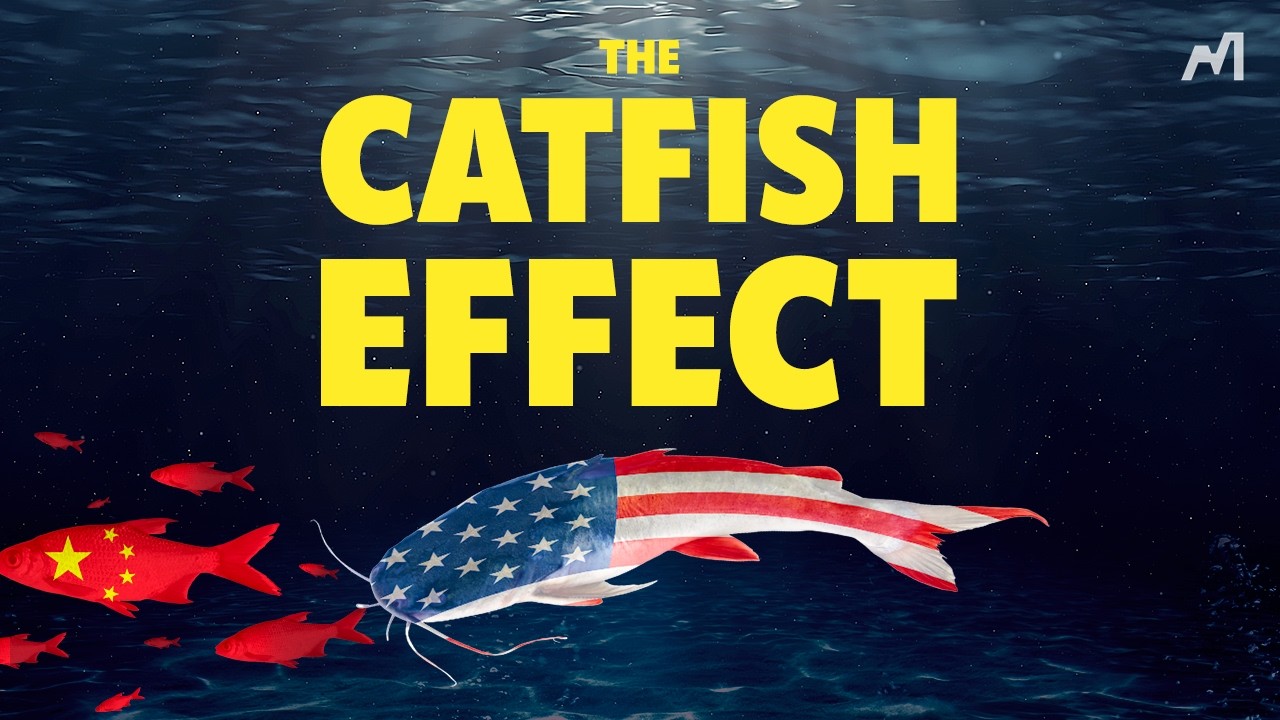
Leland Miller of China Beige Book joins Maxinomics to explain how Xi Jinping's CCP keeps China predictable by controlling what's made, where people move and who enters. State-owned enterprises—9 trillion of China's 16-trillion stock market—let the party pick winners, steering cheap state credit into solar, EVs, batteries and shipbuilding. Hukou rules grew Shenzhen from 30,000 people in 1980 to 18 million, while the Great Firewall and the scrapped Ant IPO after Jack Ma called Chinese banks pawn shops cap speech and business. At 0.07% immigrants and under 2,000 new citizens a year, China stays closed yet gave Tesla a fully owned Shanghai factory to trigger the catfish effect that seeded its EV industry. Miller rejects collapse predictions: the non-commercial financial system doesn't fail like the West's.

You Don’t Want to Run an Airline
Feb 20, 2025 · 9:50
Airlines including American, Delta, United, Southwest and Spirit have been terrible investments for five decades because investors have put tens of billions more into them than the industry has earned in profit, argues Maxinomics. The episode explains that airlines all compete on price with nearly identical planes from just Boeing and Airbus, whose combined order backlog of 15,000 planes means buyers wait at least 8 years for delivery. Idle planes lose $400–$800 per hour, and catastrophes like 9/11 and COVID grounded fleets while fixed costs like pensions and terminal fees continued. Southwest's one-plane Boeing 737 strategy and 10-minute turnarounds explain its outperformance. United's stock fell below its fleet's value, prompting buybacks and Elliott Management's Southwest campaign, while suppliers TransDime and FTAI profit on Spirit's $1.08 million-per-plane yearly maintenance. The whole industry's profit is just $22 billion—less than Google makes in a quarter.
Is Waymo About to Dethrone Uber?
Nov 1, 2024 · 9:30
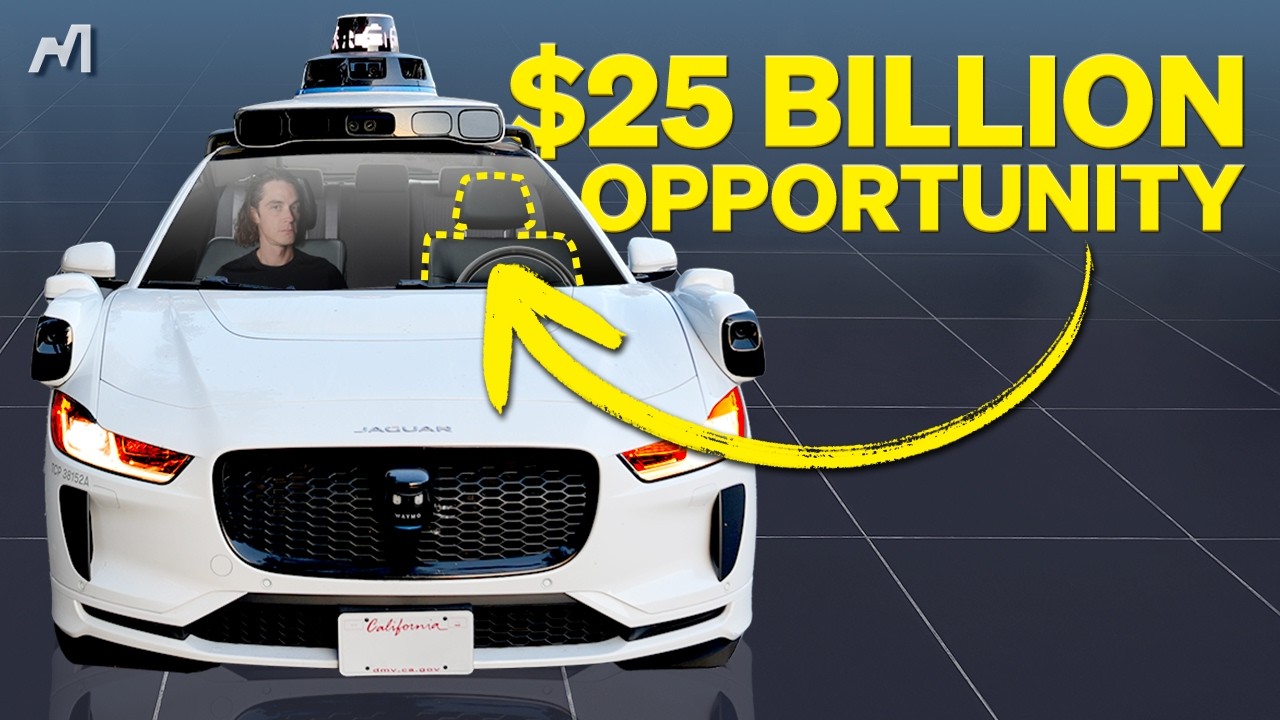
Uber stands to capture the $25 billion that US riders pay drivers each year by partnering with Google's Waymo, which has scaled driverless rideshare from under 300 rides per day in Phoenix last January to 15,000 rides per day across four cities, on track for 40,000 within a year. Phil Andrews argues Uber's exclusive Waymo deal in Austin and Atlanta lets the historically asset-light company pocket $0.70 per mile, since riders pay $3.20 per mile while a Waymo costs at most $1.50 per mile to operate, and to redesign the door-to-door experience it currently can't control with human drivers. Using Chicago's full 136-million-ride dataset, he estimates covering peak demand would take roughly 10,000-20,000 cars per city, or a minimum of 300,000 Waymos across the 30 largest US cities. At a $0.15 per-mile profit and 50% market share, Waymo could earn $4 billion a year, though Tesla FSD, Zoox, and Nuro compete, and the next city choice—snowy or Sunbelt—will signal the software's confidence.
Powered by PodHood